
Usually, yes. What goes wrong depends on who owns the pack. In compliant consumer e-bike batteries, used correctly, one of the most common failures isn’t a fault at all. It’s deep discharge over winter. In lease and commercial fleets it is mechanical: mechanisms failing and wearing, housings cracking. In both cases the cells are usually fine, and the same eight conditions decide whether the pack gets a second life.
If your brand ships a battery pack, this is about what happens to it when a fault is reported, what you give up each time one is replaced and shredded, and what to ask for in your next pack.
This is the follow up I promised in June. A post about a battery pack that opens started a debate I couldn’t resolve from a LinkedIn thread. So I ran a short sprint on one question: when is a recovered battery safe to put back into service? That sprint was part of the Design Council’s Design Skills for Embedding Circularity (DSfEC) pilot. I spent it talking to battery repairers, UK bike businesses and others working on the problem, and presented the outcome to the cohort in July. The findings went on show at the DSfEC symposium, held at the Design Museum earlier this month.
What goes wrong when you sell to riders?
Bikes are often left in storage over the winter without being charged. Here’s how it plays out:
- The bike is parked up for winter.
- The pack slowly discharges until it drops below the voltage where its battery management system (BMS), the electronics that protect the cells, switches off.
- Power to the BMS is lost.
- The BMS disables the pack, as it should.
- In spring, the user takes the bike to the shop for repair.
- The shop swaps in a new battery.
- The old pack is classified as “faulty”.
- The shop is told to recycle the “faulty” battery.
Cells that are often perfectly good are shredded to black mass, the powder that recyclers recover metals from.
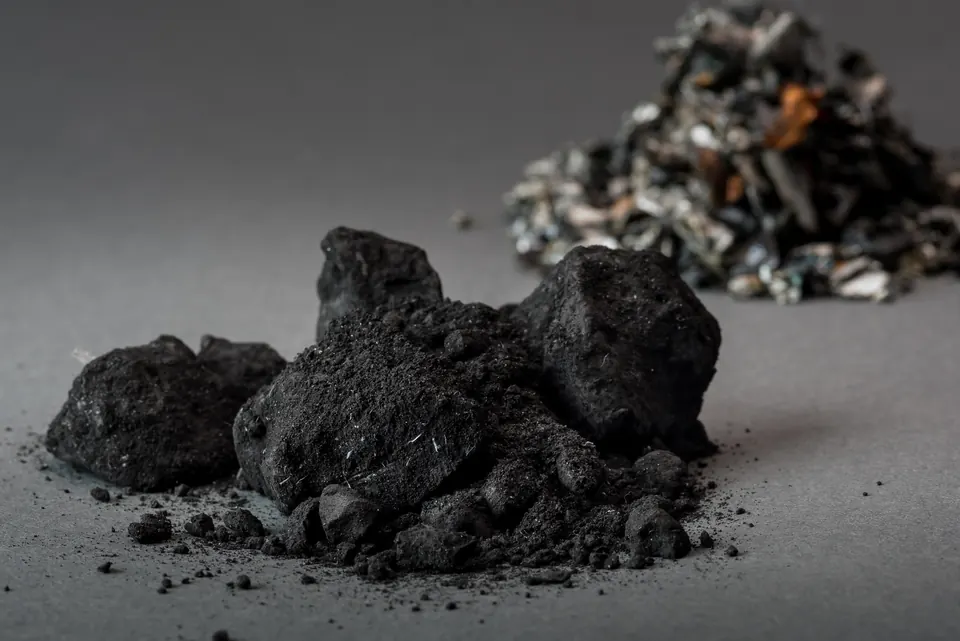
In many cases the battery was never faulty. It was left to go flat, because nobody told the user it was about to happen.
One professional repairer I spoke to sees a lot of packs like this. There is nothing wrong with them. They just haven’t been charged regularly. With specialist tools the cells can usually be recovered, and once they recover, the BMS switches back on. That is a job for a professional, not something to try at home.
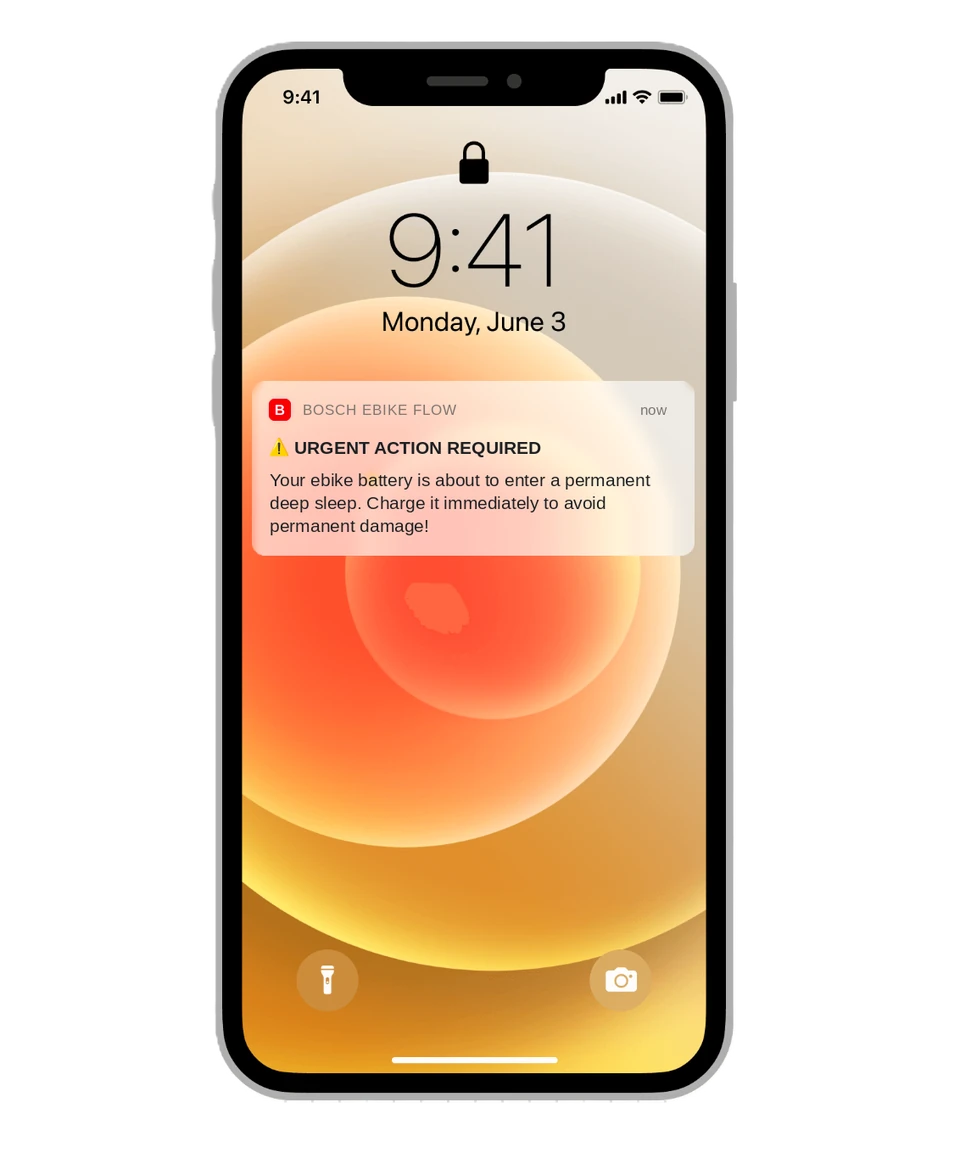
A simple change would have a significant impact: a notification on the rider’s phone telling them the battery is about to enter a permanent deep sleep, and to charge it now. Connected e-bike systems already have the app, the pack data and the notification channel. The tech is already in place to do it.
What goes wrong when the pack is leased or in a fleet?
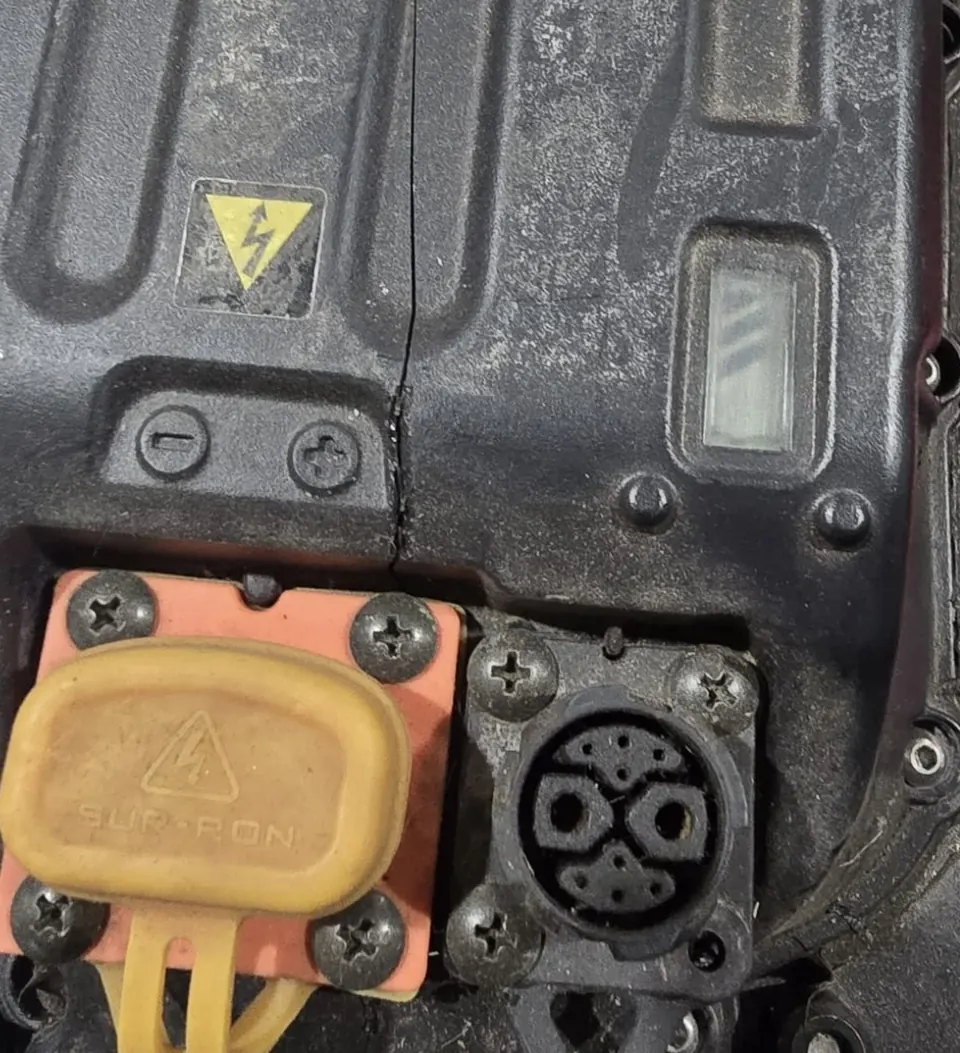
Deep discharge isn’t the story here. The biggest failure is mechanical: mechanisms failing and wearing, housings cracking.
NOWOS repairs packs at scale, and the vast majority of theirs come from bike and scooter share and rental schemes. Their field data shows where the faults typically lie:
- Mechanical failures and wear: 70%
- Software and BMS: 16%
- Cells: 14%
Only around one fault in seven is in the cells. And most of these packs can be put right. NOWOS repaired 90,000 batteries in 2024. That’s more than 80% of everything they received, and 310 tonnes kept in service. Their latest figures put the repair rate at 89%.
What does that cost you?
You will be best placed to know how much a replacement pack is costing your business. But from my experience, I know this is not a small amount of money. So here’s the question. How many packs did you replace last year, and how many of them could have been charged, reset or repaired?
Each time a pack that could have been saved is replaced, you give up four things:
- The cost of a new pack, where a recharge, a reset or a repair would have done.
- If you sell to riders, their confidence in the product. They have been told the battery failed. It didn’t.
- A pack that could have been refurbished and used or sold again. There is real money in what happens after the first sale.
- The knowledge of why it came back. That goes into the shredder with the pack.
Why does this matter beyond your own numbers?
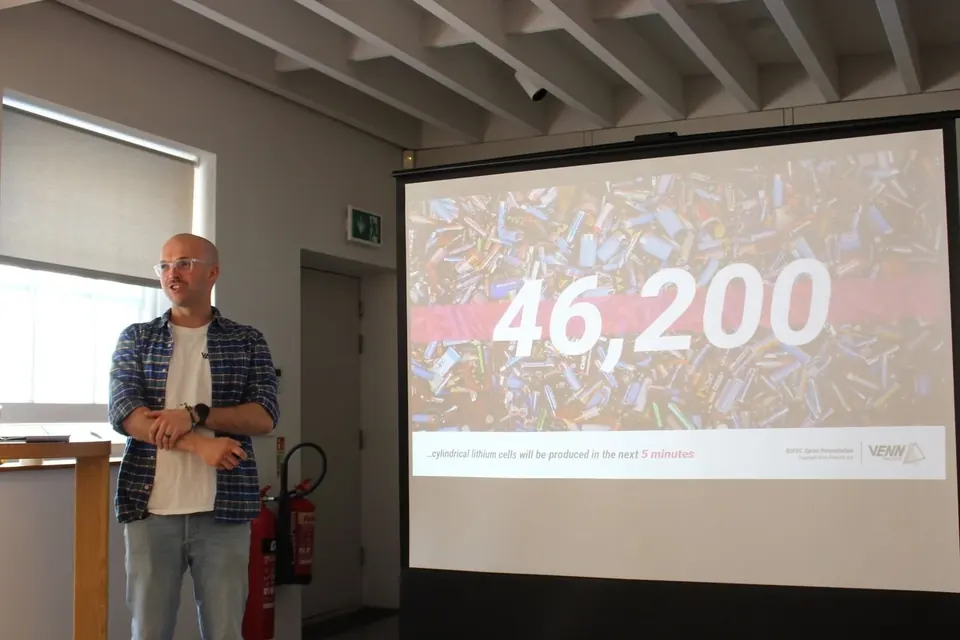
Around 5 billion 18650 cells, the standard cylindrical lithium cell, are made every year. That’s 154 every second. A typical e-bike pack has 39 of them inside, and 5.1 million e-bikes were sold in Europe in 2023. That’s nearly 200 million cells. Just in European e-bikes. Just in one year.
There is a carbon cost to each one that is scrapped early. NOWOS puts a new battery at 105 kg CO2e and a professional repair at 10 to 13 kg, so every repaired battery avoids around 90 kg.
Is repairing a battery actually safe?
When a battery fault is reported, recycling is usually treated as the only safe option. My sprint found the danger is real but conditional, and manageable under the right circumstances. A recovered e-bike battery can go back into service only when all eight of these conditions are met, whoever owns it.
1. The cells are genuine OEM
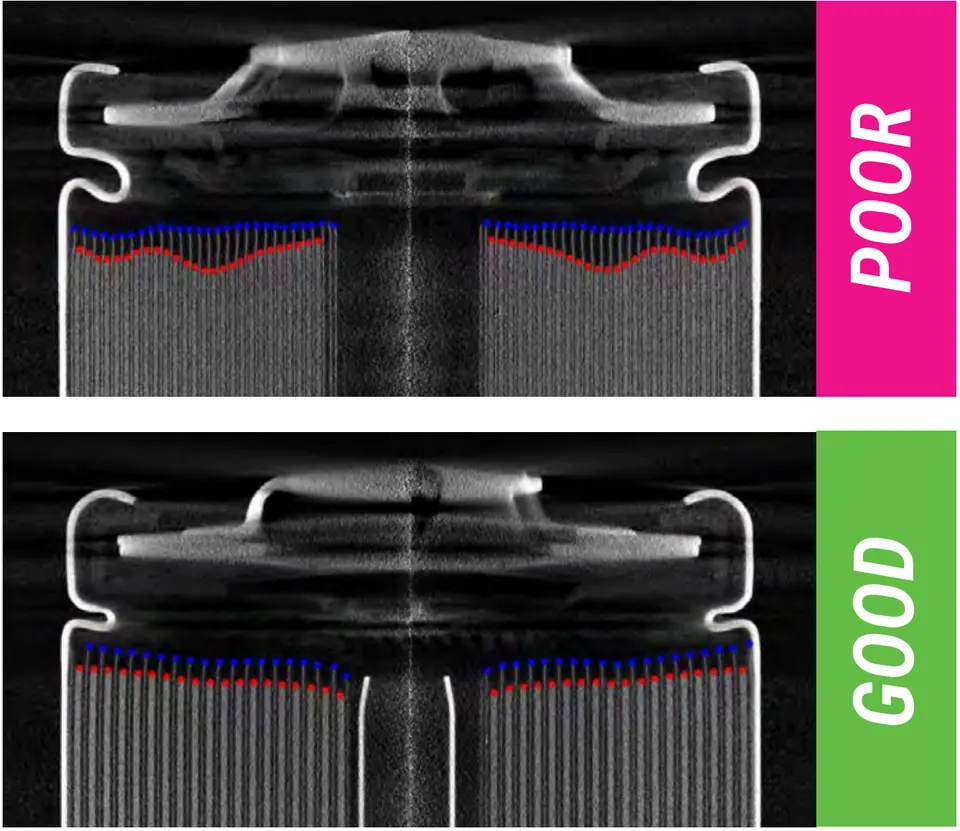
That means cells from the original, reputable cell makers. Lumafield CT scanned over 1,000 18650 cells, roughly 100 each from 10 brands across price points. 33 cells had a dangerous defect. Every one of them came from a low cost or counterfeit brand, and one brand, sold on a marketplace whose name rhymes with Shmee-Shmuu, had a 15% defect rate. Not a single OEM cell carried a dangerous defect.
If you can trace a pack’s cells back to a reputable cell maker, it clears the first hurdle. If you can’t, it stops here.
2. The pack isn’t deemed “critical”
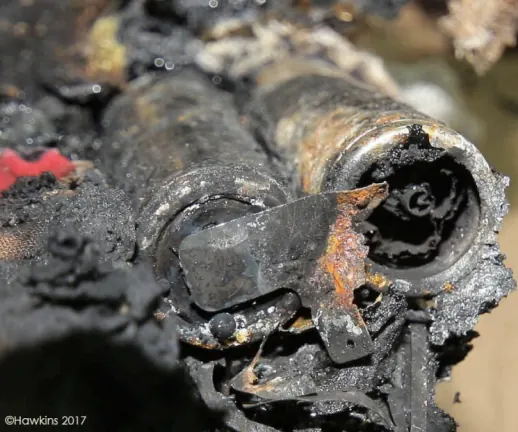
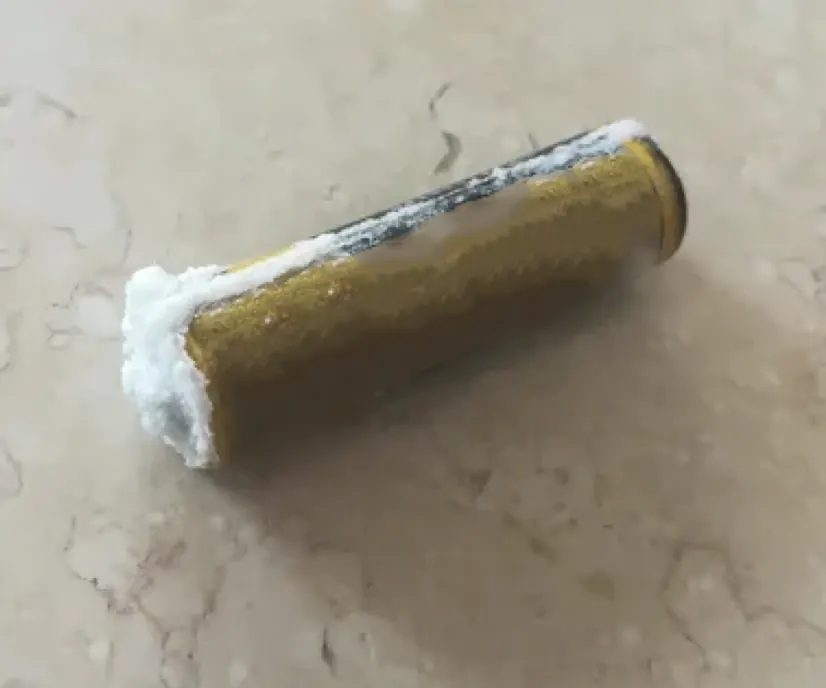
Some packs are done. Swelling, leaking electrolyte (it smells sweet), signs of burning or being waterlogged all mean one thing: recycle, don’t ship, don’t repair.
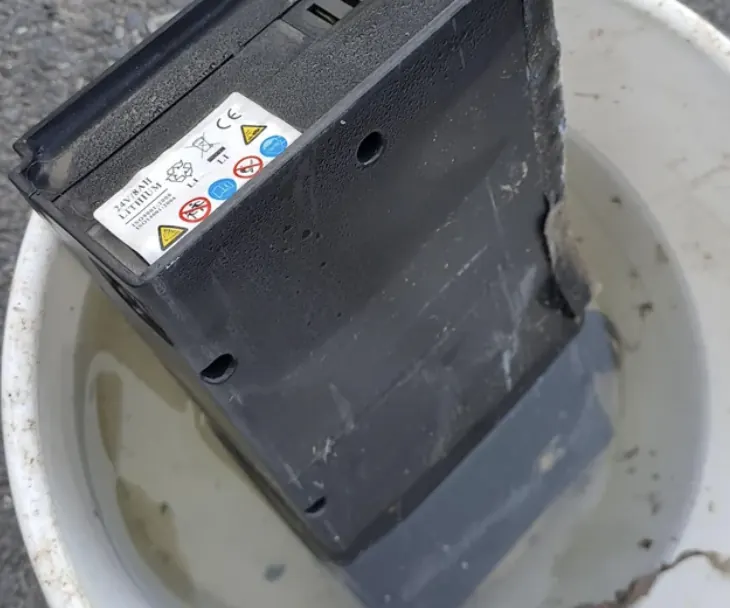
Water is the sneaky one. Corrosion and dendrite growth mean a soaked pack can ignite days after exposure. So don’t leave them in the rain. It is also why sealing deserves attention in your next pack.
3. The bike shop knows repair is an option
Most don’t. The brand with around half of the European market instructs shops, in its warranty process, to brick the battery in the diagnostic tool and recycle it.
So shops sit on piles of “dead” batteries, bundled up and disposed of however they can. Most likely a periodic run to the local household waste recycling centre.
4. It’s captured before it becomes waste
The moment a pack is discarded at a recycling centre, it is legally waste. And once waste, always waste. At least in the world of economically viable repair.
5. It’s prepared for transport as dangerous goods
A lithium pack on its way to a repairer is dangerous goods, and the rules for moving them by road are known as ADR. That means UN certified packaging, Class 9 labelling, UN3480/3481 marks and the paperwork to go with it. It often requires training at the sender’s end, which is usually the bike shop.
6. The manufacturer supplies spares
That is you. No parts, no repair. The EU Battery Regulation should force this from 2027, but it doesn’t apply in the UK.
7. A professional repairer does the work
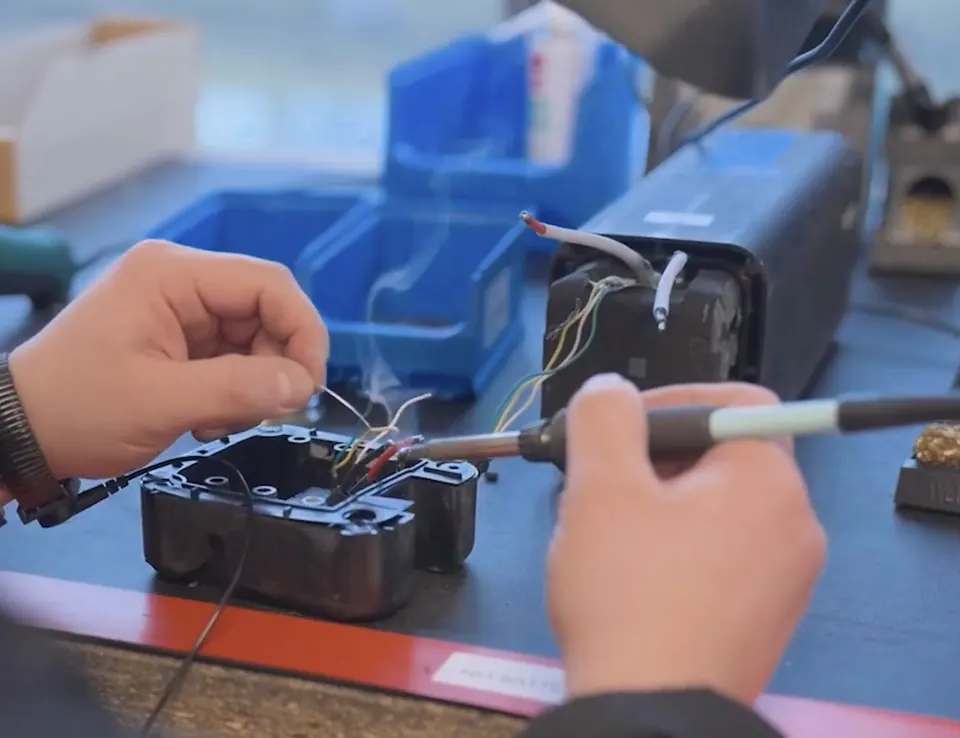
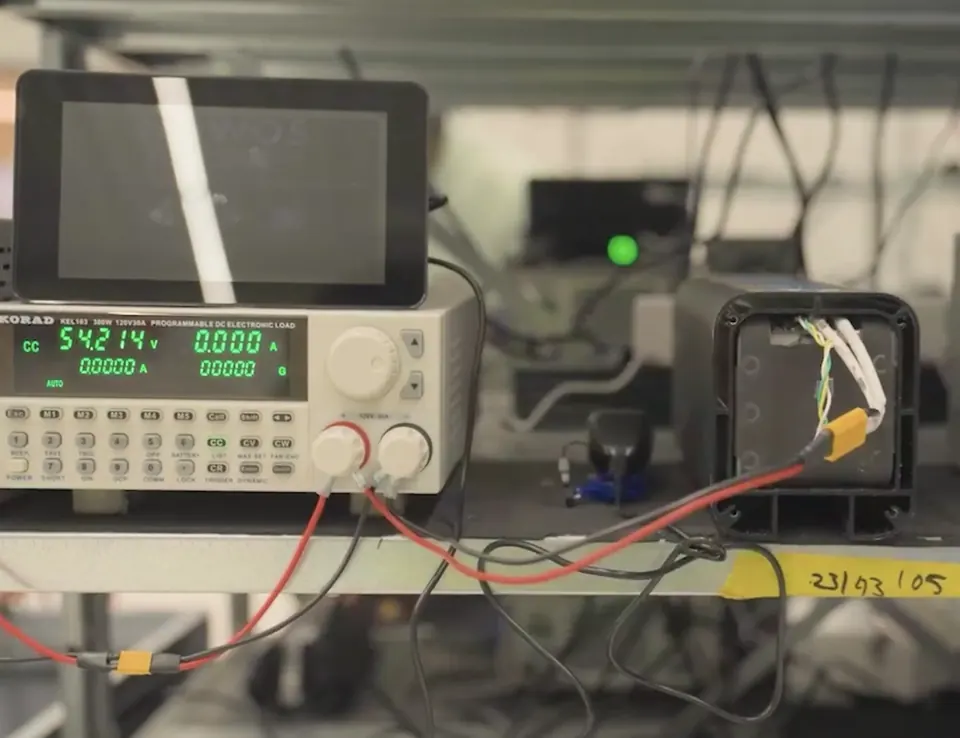
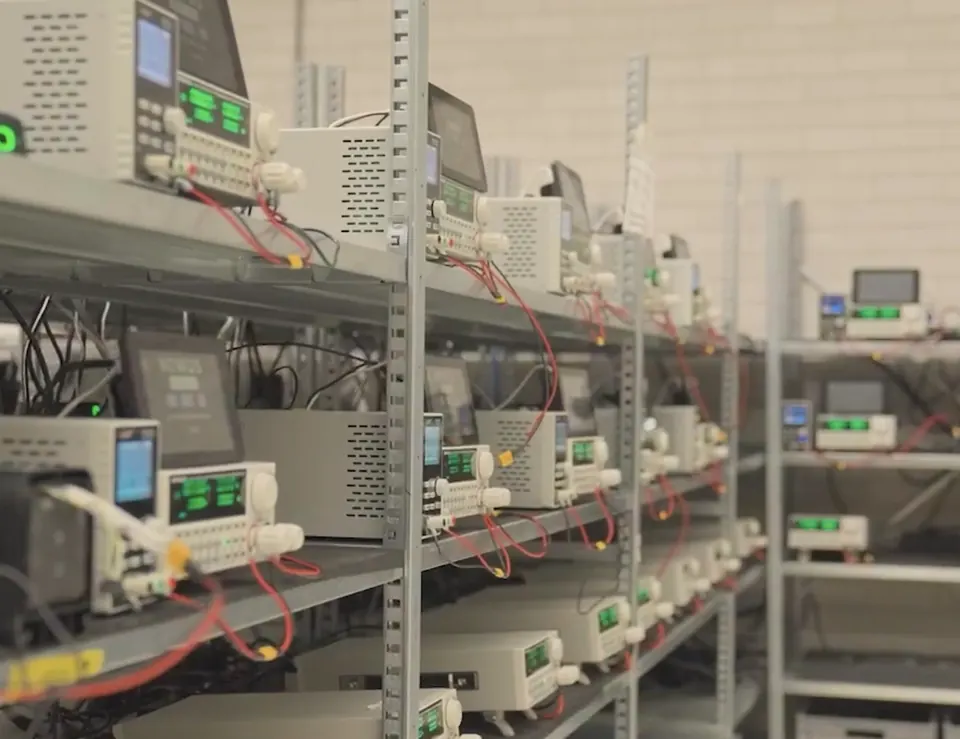
This isn’t a kitchen table job with a YouTube tutorial and a spot welder. A professional repairer has the diagnostics, the safe handling and storage, and the parts to put a pack back into service properly. NOWOS, for example, uses only original components so the pack keeps its UN 38.3 certification, the safety test a lithium battery must pass before it can be shipped.
8. The BMS can be reset, or an OEM replacement purchased
Packs are paired to bikes, and repairers are locked out. Without the ability to reset a BMS, or buy a genuine replacement from the manufacturer, fixing the pack is pointless.
Look back over that list. Four of the eight are decided by the brand: which cells are specified, what the warranty process tells the shop, whether spares exist and whether the BMS can be reset. Most of what stands between a recovered pack and a second life is about design, process and information, not chemistry.
What should you ask whoever designs your next pack?
None of this needs new cell chemistry. It needs decisions made early in a development programme, when they’re cheap to make. These are the questions I’d put to whoever is designing your pack:
- Can the parts that wear and break be replaced without disturbing the cell modules? In fleet packs, that is where 86% of the faults are.
- How is it sealed, and how has that been tested? Water ingress is what turns a repairable pack into a critical one.
- Which cell maker are the cells from, and are the records kept? It’s the first thing a repairer needs to know.
- Is there a BMS reset path for repairers, or can they buy a replacement? Pairing a pack to a bike for security is fine. Locking out repair isn’t.
- Does the rider get a warning before the pack goes to sleep? If the BMS knows it’s heading for cut off, the rider should too.
- Are spares planned from day one, or only when a regulation forces it?
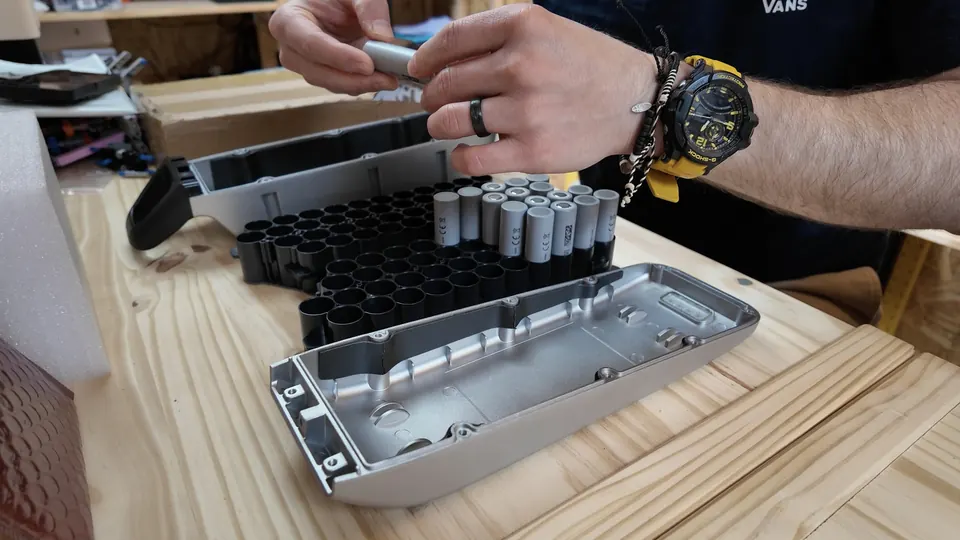
And one for your own team: what does your warranty process tell the shop to do with a returned pack?
What happens next?
I’m taking up UK Battery Repairs’ referral offer to implement best practice repairable battery construction in upcoming projects. I’m also following up with UK bike businesses to understand their workflows when a customer or service provider reports a “faulty” battery.
If you’re developing a pack, or you’re a brand wondering what happens to yours after a fault is reported, get in touch. Designing products that can be repaired and kept in service is part of what I do.
Thanks also to UK Battery Repairs, NOWOS, Infinite Battery, BatteryIQ and Cyclewise for their time and insights during the research for this sprint.
Sources
- CONEBI, European Bicycle Industry and Market Profile 2024: 5.1 million e-bikes sold in Europe in 2023.
- Market Report Analytics, 18650 Rechargeable Lithium Battery Report: annual 18650 production exceeding 5 billion units.
- Lumafield Battery Quality Report, 2025: 1,054 cells from 10 brands, 33 with negative anode overhang, all in low cost or counterfeit cells.
- NOWOS, Sustainability and Impact: 105 kg CO2e for a new battery versus 10 to 13 kg for a repair (Rainbow Standard methodology), and the 89% repair rate.
- Tech.eu, April 2025: NOWOS repaired 310 tonnes, or 90,000 batteries, in 2024, with more than 80% of batteries received repairable.
- UK Battery Repairs shipping guidance: critical pack signs and dangerous goods packaging.
- NOWOS field data: the 70/16/14 fault split.