
Leading a Product Development Team: 5 Fundamentals I Check First
TL;DR — Quick Leadership Cheat Sheet
The 5 things I look for when supercharging a product design engineering team:
Common Understanding — Ensure everyone speaks the same language; define terms and avoid ambiguity.
Self-Orientation — Make processes clear, visible, and actionable so the team can navigate independently.
Focus — Protect the team from noise, keep the mission clear, and provide air cover.
Communication Channels — Make updates transparent, documented, and accessible; use collaborative tools effectively.
Context — Help the team understand how their work intersects with other teams; reduce scope creep and enhance accountability.
When these foundations are in place, teams move faster, make better decisions, and deliver game changing results with far less friction.
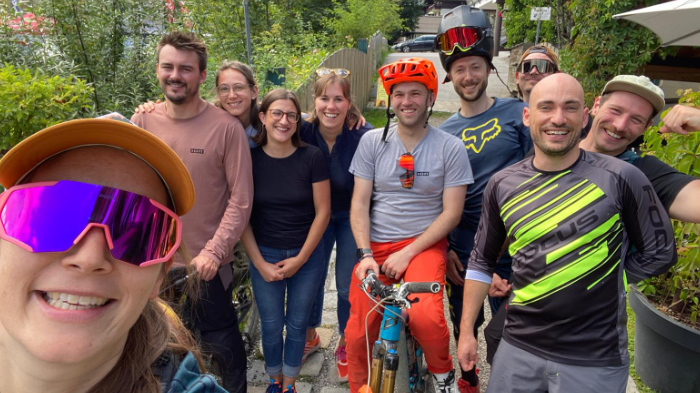
(Some of the KISKA Munich bicycle development team)
Here’s the squeeze…
For many product-led businesses, this point in the calendar creates a natural pause. Work is landing in SE Asia ahead of Chinese New Year, show season is approaching, and leadership teams finally have space to reflect.
A useful question to ask is a simple one:
Is your product development team genuinely on track to deliver the roadmap — or just busy executing tasks?
When I’m brought in by founders, CTOs, MD’s or Engineering Directors to lead, reset, or scale a product design engineering team, I don’t start with tools, new hires, or restructured org charts.
I start with five fundamentals.
Think of this as a sneak peek at the checklist I run through before touching anything else.
1. Common Understanding
Is everyone speaking the same language?
Misaligned language is one of the most common — and expensive — failure modes in product development.
Design, engineering, manufacturing, supply chain, and commercial teams often use the same words to mean different things. Over time, that ambiguity turns into rework, delays, and avoidable friction.
The idea of “standard terminology” is unfortunately far from standard...
Every organisation I’ve worked with has labelled prototype stages, milestones, and gates differently — even when the outputs and intent were effectively identical.
A familiar example is SOP:
Standard Operating Procedure for some
Start of Production for others
Same acronym. Very different consequences.
And that’s before we even start on the multitude of names I’ve heard for describing a prototype stage…
For leaders stepping into an existing team, there’s also a hidden asymmetry to be aware of: you arrive with a knowledge head start. What feels obvious to you often isn’t to the people doing the work day-to-day.
Cheat-sheet rule:
Define critical terms
Document them once
Use them consistently and intentionally - don’t be scared to be a ‘pedant’ when reinforcing and stabilising a cuilture!
This is foundational to effective product design engineering leadership and underpins everything from early concept work through to industrialisation.
👉 Related: Product Design Engineering
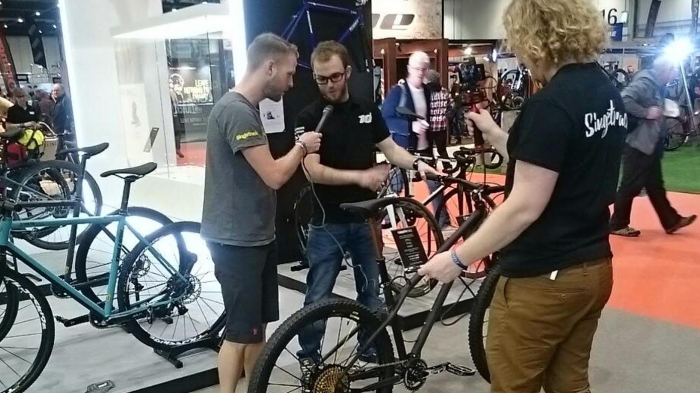
(Throwback to 2017 of learning communication techniques ‘on the fly’ with Will and Andi from Singletrack Magazine at Trillion’s London Bike Show launch.)
2. Self-Orientation
Can the team navigate without constant intervention?
High-performing teams shouldn't be relying on leadership to tell them what to do next. They can and need to be able to orient themselves.
That requires a product development process that is:
Defined
Visible
Understood
If you already have a development process, get it up on the wall — physically or digitally.
If you don’t, create one.
It doesn’t need to be perfect but it does need to exist.
At each milestone, deliverables should be:
Explicit
Actionable
Clearly owned
One practical rule I apply without exception:
Every task should start with an action verb.
Not “Tolerance stack-up” — but “Review tolerance stack-up.”
This single habit dramatically improves clarity, accountability, and momentum — especially as teams scale or integrate external partners.
👉 Related: New Product Development
👉 See examples: Case Studies
Bonus tip:
If you get your systems and processes right, this can double up as a tool that allows founders, CTOs, and stakeholders to quickly understand where the programme actually is — not just where it was planned to be.
3. Focus
Is the team protected enough to do its best work and avoid the trap of frustration and despair?
Focus is fragile in growing product organisations.
Noise enters from everywhere: shifting priorities, late-stage changes, stakeholder anxiety, and commercial pressure. Without intervention, it fragments effort and slows delivery.
One of the most valuable things leadership can provide is focus through protection.
That means:
Keeping the mission clear and unambiguous
Dampening noise elsewhere
Holding the course when pressure rises
This often involves providing air cover — absorbing uncertainty, filtering distraction, and making deliberate trade-offs so the team can execute.
There’s a simple leadership principle that applies here (stolen straight from the parenting books - as many tips are):
“My calm is contagious.”
Teams take emotional cues from their leaders. Clarity, belief, and steady optimism — grounded in reality — are powerful performance multipliers.
👉 About the approach: About Venn Projects
(As distractions come, getting the chance to headline sponsor the Fort William DH World Cup was one I had less objection to…)
4. Communication Channels
Is the right information getting to the right people, at the right time?
Unclear communication channels quietly undermine otherwise capable teams.
Updates get diluted, context is lost, and decisions are made on second-hand information — often without anyone realising.
Strong teams make information:
Transparent
Accessible
Available on demand (no gatekeeping!)
Meeting minutes matter — not just for leadership, but for the entire delivery team. What didn’t feel important to you may be critical context for someone else downstream. Remember that your team are wired differently from you and that’s a super-power that requires your support to flourish!
Collaborative tools such as Monday.com, Teamwork, or Basecamp can be powerful enablers — but only if the input quality is high, onboarding is delivered thoroughly and successfully and usage is diligently maintained.
A simple rule applies: crap in, crap out.
Good communication discipline isn’t an option in a productive and cohesive — it’s essential.
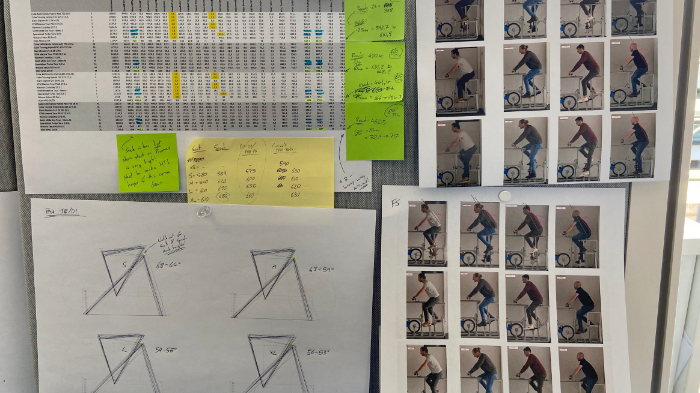
(No tools? No problem! Go old school and get your work on the wall…)
5. Context
Does the team understand how their work fits into the wider system?
Many people in product design engineering teams don’t have full visibility of the functions that overlap or dovetail with their own — manufacturing, quality, supply chain, commercial, or service.
When that context is missing, responsibilities blur and accountability becomes unclear.
Providing context helps teams build empathy for how their work affects others — upstream and downstream. That empathy directly influences how work is completed, not just what is delivered.
Clear context also:
Reduces unnecessary scope creep
Helps teams make better local decisions
Keeps individual delivery focused and on track
If its an option available to you, get your team away from the desk, out of their comfort zone and in amongst the action on the factory floor!
When people understand where the boundaries are — and why they exist — they’re far more effective within them.
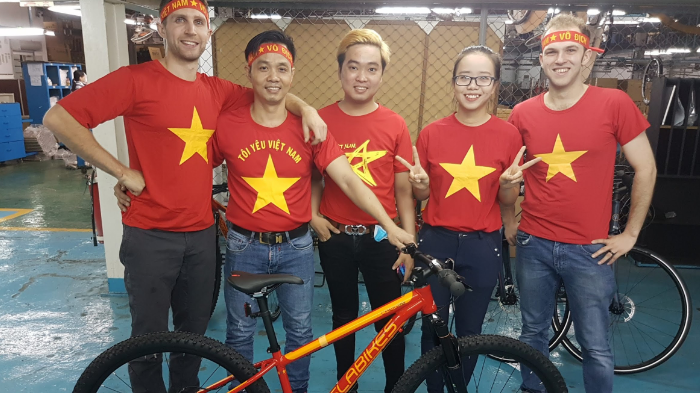
(On the ground in Vietnam with a factory prototyping team.)
The Takeaway for Leadership Teams
If these five foundations aren’t in place:
Shared language
Clear self-orientation
Sustained focus
Transparent communication
Meaningful context
Then delivery will always feel harder than it should — regardless of how capable the individuals are.
When they are in place, teams move faster, make better decisions, and translate strategy into outcomes with far less friction.
This is often the difference between a product organisation that is busy and one that is genuinely effective.
Related reading: The Intersect Blog
Want to talk? Get in touch